Ironically in the age of AI the value of data increases even more than the big data era. Effective data governance…
We are specialist Microsoft partners, building the critical data platforms on Fabric and Azure AI that power business intelligence and drive the next generation of Agentic AI.
Ironically in the age of AI the value of data increases even more than the big data era. Effective data governance…
As organisations move more workloads to Microsoft Fabric, predictable cost becomes a governance problem as much as an engineering one….
Introduction Managing capacity in Microsoft Fabric goes beyond provisioning the right SKU — it’s about understanding how that capacity behaves under…
As Microsoft Fabric matures into a production-grade analytics platform, the concept of capacity becomes central to how organizations plan, operate,…
AI succeeds or fails on the trustworthiness of its data. In Microsoft Fabric, governance isn’t a layer added at the…
The promise of zero-ETL is tantalizing: connect your live systems to Microsoft Fabric’s OneLake, and downstream analytics and models just…

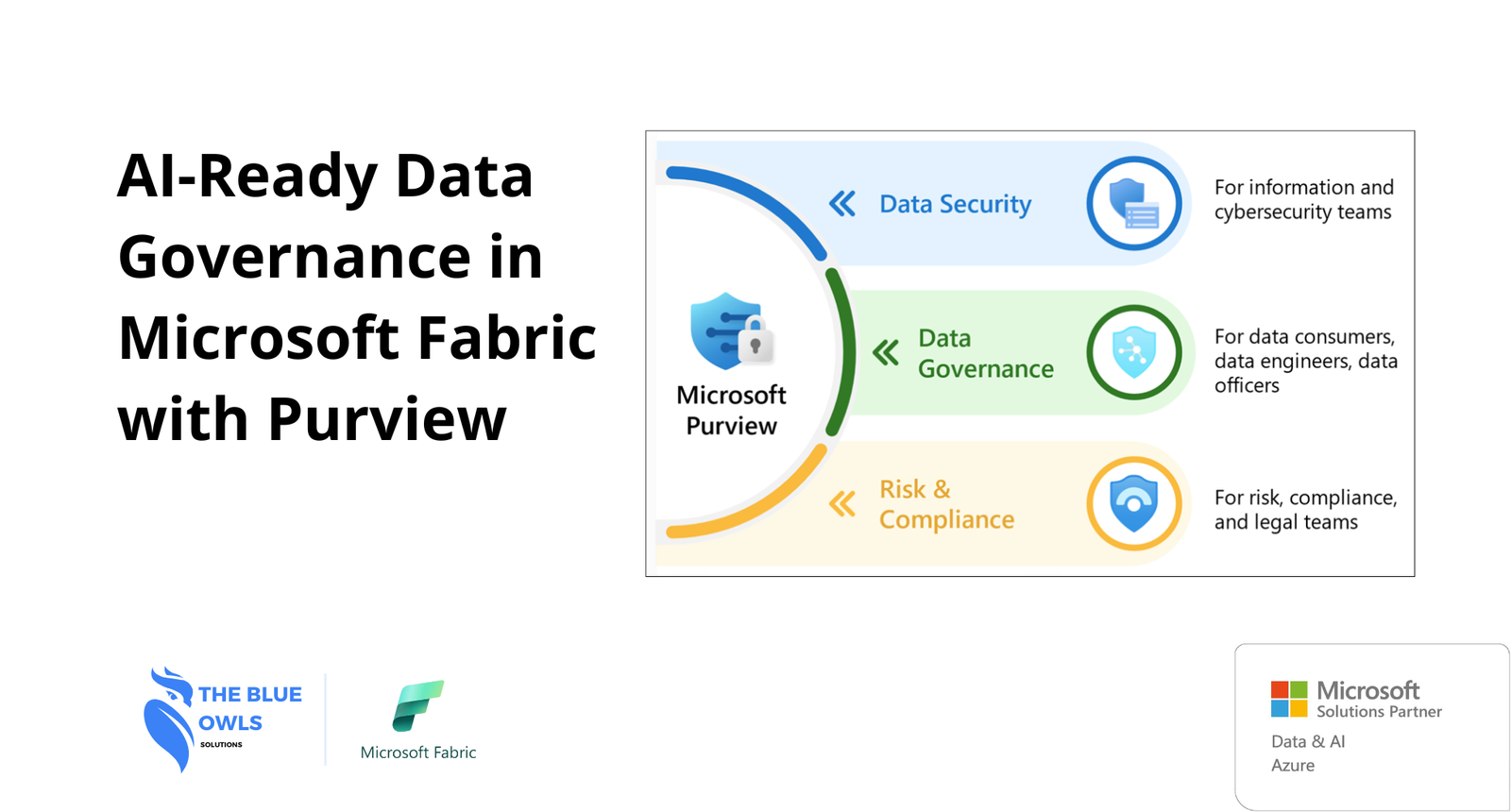
Ironically in the age of AI the value of data increases even more than the big data era. Effective data governance ensures that data is understood, trusted, secure, and usable across the business. It defines how data should be managed, who is responsible for it, and how it supports both innovation and compliance. And when…

As organisations move more workloads to Microsoft Fabric, predictable cost becomes a governance problem as much as an engineering one. Fabric’s unified capacity model (Capacity Units / CUs, purchased as F-SKUs) is powerful — it lets many teams share a single compute fabric — but that same unification concentrates risk: a single pattern or behaviour…

Introduction Managing capacity in Microsoft Fabric goes beyond provisioning the right SKU — it’s about understanding how that capacity behaves under real workloads. Fabric’s Capacity Metrics App is designed for exactly that: to give administrators and platform owners visibility into compute consumption, workload behavior, and system health across every experience running under a shared capacity.…

As Microsoft Fabric matures into a production-grade analytics platform, the concept of capacity becomes central to how organizations plan, operate, and pay for their data ecosystem. Capacity management in Fabric isn’t simply about compute limits — it’s about ensuring reliability, predictability, and cost control across every workload running under a shared engine. From lakehouse jobs…

AI succeeds or fails on the trustworthiness of its data. In Microsoft Fabric, governance isn’t a layer added at the end—it’s the connective tissue that binds ingestion, transformation, analytics, and model consumption into a verifiable system of record. Purview provides the policy brain; Fabric provides the execution spine. Done well, governance here is not a…

The promise of zero-ETL is tantalizing: connect your live systems to Microsoft Fabric’s OneLake, and downstream analytics and models just see fresh data without you having to build and maintain tedious pipelines. In early proofs of concept, that idea often works well. But when teams scale toward full pilots or production, hidden limits and schema…

“Zero-ETL” isn’t a promise that transformation disappears; it’s a shift in where the heavy lifting happens. Instead of building and babysitting brittle copy jobs, the platform continuously reflects source changes into your analytics lake—so teams spend more time modeling for the business and less time fighting pipelines. What Mirroring actually is (and isn’t) Microsoft Fabric…

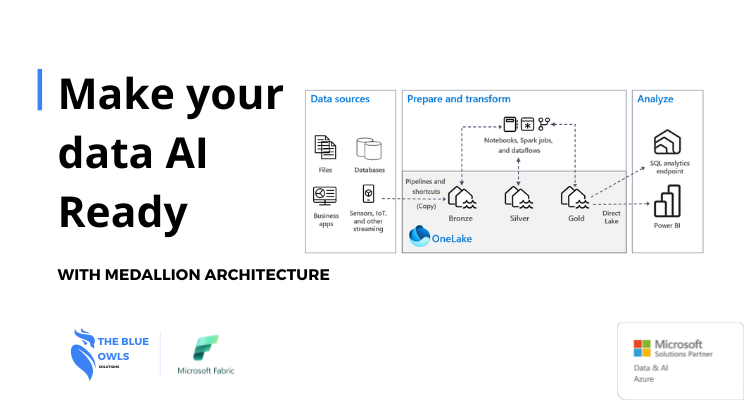
Most AI initiatives don’t stall on models—they stall on data. The gap isn’t “which LLM?” or “which AutoML?” so much as “can the organization deliver trustworthy, governed, and semantically consistent data to those systems at the right cost and latency?” A Medallion Architecture answers that question by turning the lake/lakehouse into an operating model for…

There’s a reason so many AI and analytics programs stall after promising pilots. The problem isn’t the model; it’s the mess beneath it — duplicated extracts, undocumented transformations, and business definitions that mutate from team to team. Data silos aren’t just an architectural nuisance; they’re an organizational tax on speed, trust, and outcomes. A Medallion…
Whether you’re a channel partner looking to scale or an enterprise
with a complex data challenge, we’re ready to help.